
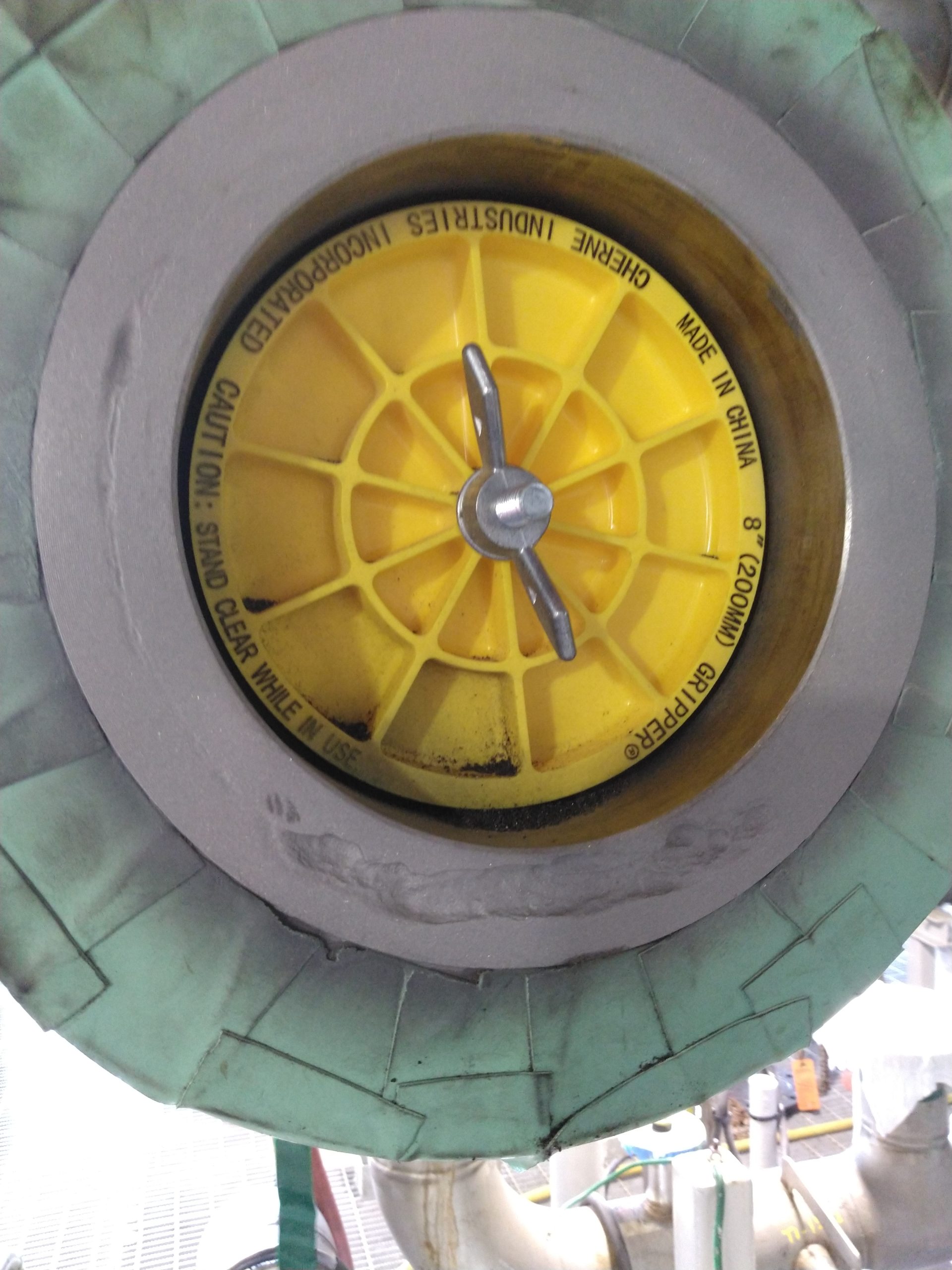
Offshore environments present some of the harshest operating conditions for industrial assets, with flange faces particularly vulnerable to corrosion and degradation over time.
Exposure to seawater, salt-laden atmospheres, fluctuating temperatures and aggressive process conditions can all contribute to flange deterioration — potentially leading to leakage, unplanned downtime and costly maintenance interventions.
Understanding the common causes of flange corrosion is key to improving long-term asset integrity and reliability.
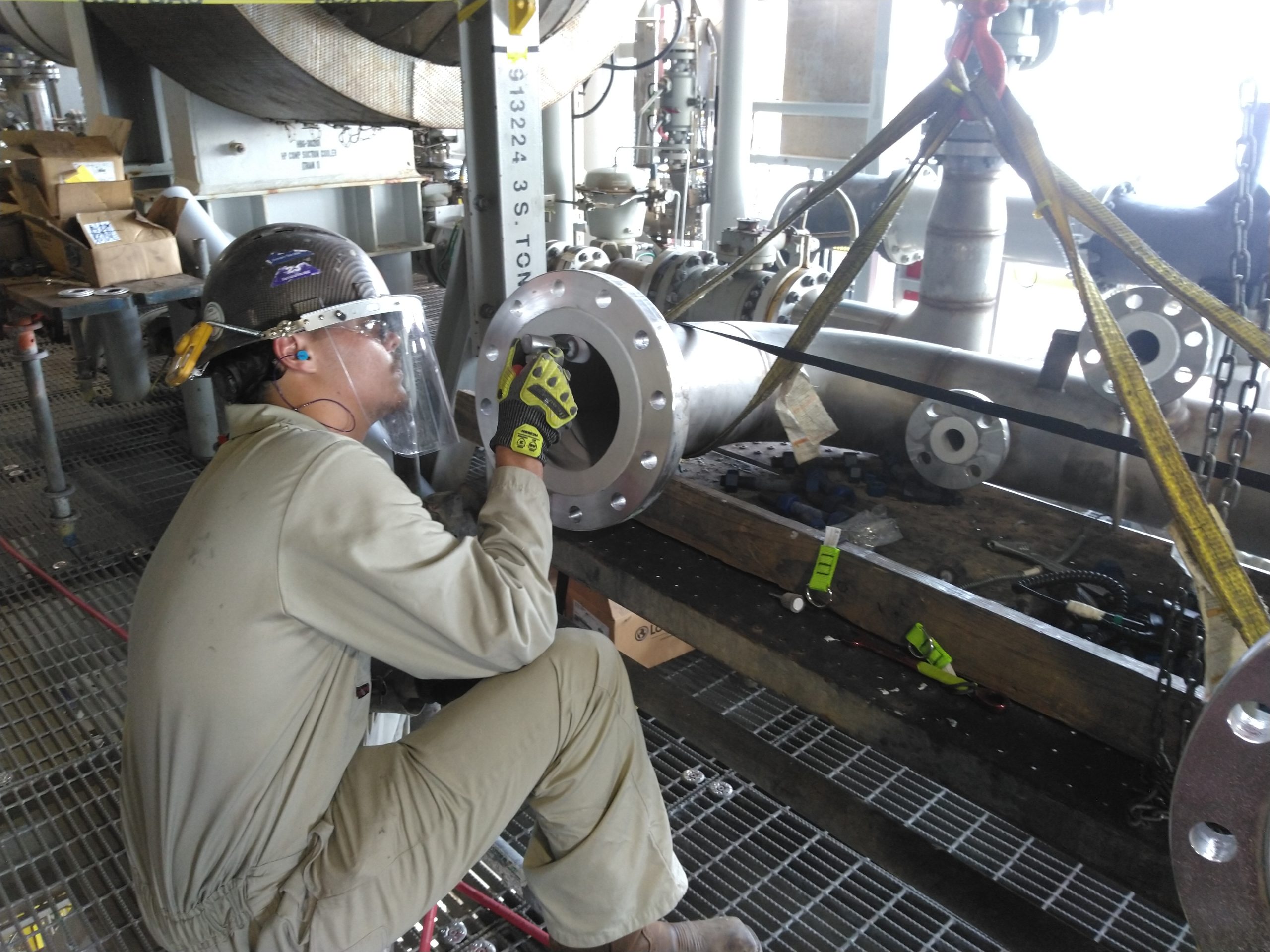
Crevice Corrosion
One of the most common forms of offshore flange degradation is crevice corrosion.
This typically develops in confined areas where moisture and chlorides become trapped between flange faces, gaskets or bolting assemblies. Once initiated, corrosion can progress rapidly beneath the surface, often remaining undetected until sealing performance is compromised.
Crevice corrosion is particularly problematic in seawater systems and offshore cooling water applications.
Coating Breakdown and Mechanical Damage
Protective coatings can degrade over time due to environmental exposure, impact damage, poor surface preparation or ageing.
Once coating systems are compromised, exposed metal surfaces become vulnerable to accelerated corrosion attack. Mechanical damage during maintenance activities or installation can also create localised failure points.
Regular inspection and maintenance are essential to identify early signs of coating deterioration before more significant asset damage occurs.
Galvanic Corrosion
Offshore systems frequently utilise dissimilar metals, which can create galvanic corrosion when exposed to conductive environments such as seawater.
Differences in electrochemical potential between materials can accelerate corrosion of the less noble metal, particularly around bolted flange assemblies and pipe connections.
Material compatibility and correct specification play an important role in minimising galvanic corrosion risks.
Environmental Exposure
Constant exposure to salt spray, humidity, UV radiation and temperature cycling places significant stress on offshore assets.
These harsh environmental conditions can accelerate corrosion rates, particularly in splash zones and areas where water ingress or condensation is common.
Without effective corrosion protection strategies, flange integrity can deteriorate quickly in offshore service environments.
The Importance of Early Intervention
Identifying corrosion at an early stage allows operators to implement repair and protection solutions before more extensive damage occurs.
Specialist repair systems and advanced protective coatings can help restore flange integrity, minimise downtime and extend operational service life without the need for costly component replacement.
At Corroserve, we support operators across offshore and industrial sectors with specialist corrosion repair and protection solutions designed to improve long-term asset reliability in challenging operating environments.
VISIT OUR OTHER SITES:

